
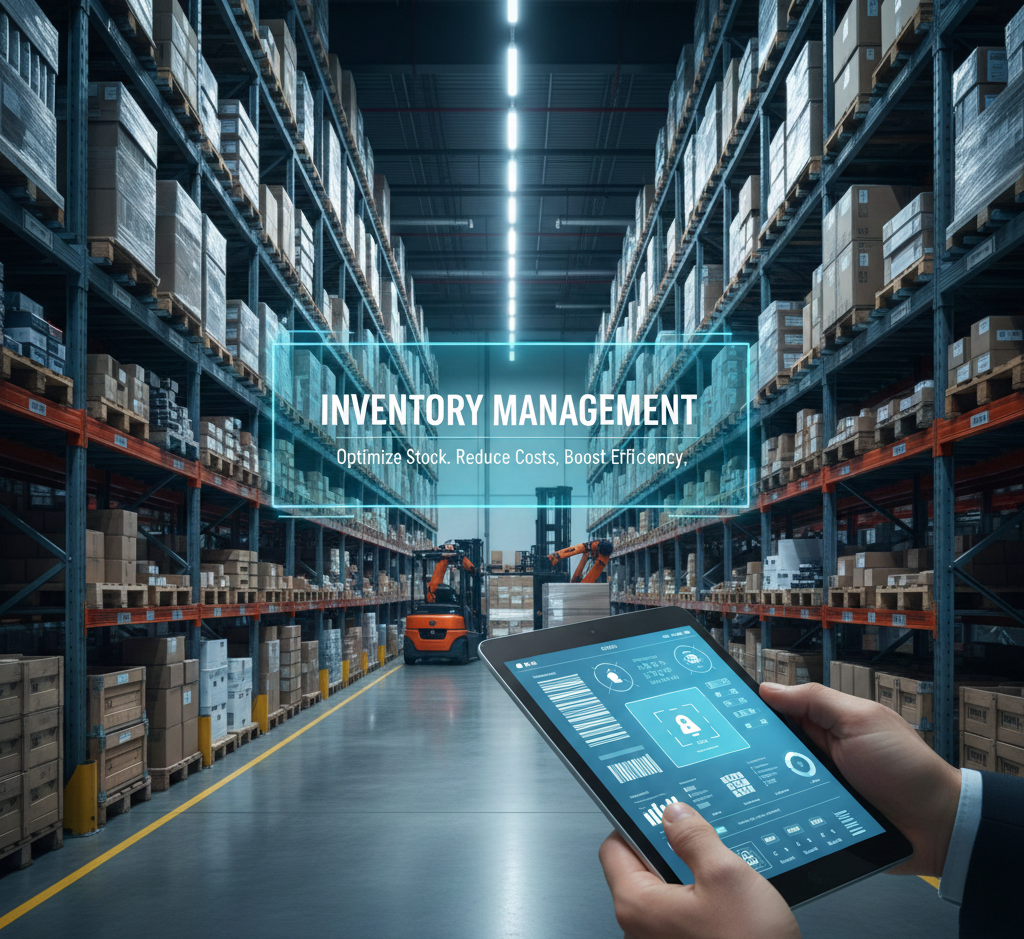
Inventory Management: The Complete Guide to Controlling Stock Efficiently

Introduction to Inventory Management
Inventory management is the backbone of any successful business that deals with physical goods. Whether you run a small retail shop, manage a warehouse, or oversee a manufacturing plant, inventory is the heartbeat of your operations. Manage it well, and everything flows smoothly. Manage it poorly, and chaos follows.
What Is Inventory Management?
Inventory management is the process of ordering, storing, tracking, and controlling a company’s stock. This includes raw materials, components, work-in-progress items, and finished products. Think of it like balancing your personal budget—too much spending hurts, but too little means missed opportunities.
Why Inventory Management Matters Today
In today’s fast-paced market, customers expect instant availability and fast delivery. Poor inventory management leads to stockouts, overstocking, wasted money, and unhappy customers. Efficient inventory management ensures you have the right product, at the right time, in the right quantity.
Types of Inventory
Understanding inventory types helps businesses control stock more effectively.
Raw Materials Inventory
These are the basic materials used in production. Without proper control, production delays and quality issues can occur.
Work-in-Progress (WIP) Inventory
WIP includes goods that are partially completed. Managing WIP efficiently keeps production lines moving without bottlenecks.
Finished Goods Inventory
These are products ready for sale. Too many finished goods tie up cash, while too few lead to lost sales.
Maintenance, Repair, and Operations (MRO) Inventory
MRO items don’t directly enter the final product but are essential for operations, such as spare parts and tools.

Key Objectives of Inventory Management
Ensuring Product Availability
The main goal is simple: never disappoint customers. Having products available builds trust and loyalty.
Reducing Inventory Costs
Inventory comes with costs—storage, insurance, handling, and depreciation. Effective management keeps these expenses under control.
Improving Cash Flow
Inventory ties up capital. Optimizing stock levels frees cash for growth and innovation.
Inventory Management Processes
Inventory Planning
Planning determines how much stock to hold and when to reorder. It relies heavily on demand forecasting and historical data.
Inventory Purchasing
Smart purchasing avoids bulk-buying mistakes while ensuring supplier reliability.
Inventory Storage and Handling
Efficient storage improves picking speed, reduces damage, and maximizes warehouse space.
Inventory Tracking and Control
Tracking ensures real-time visibility, helping businesses respond quickly to changes.
Inventory Management Techniques
FIFO (First In, First Out)
FIFO assumes older stock is sold first. It’s ideal for perishable goods and reduces waste.
LIFO (Last In, First Out)
LIFO sells the newest inventory first. While useful for accounting in some cases, it’s less practical operationally.
Just-In-Time (JIT)
JIT minimizes inventory by receiving goods only when needed. It reduces costs but requires reliable suppliers.
ABC Analysis
ABC analysis categorizes inventory based on value and importance.
Category A Items
High-value items with low quantity. These require strict control.
Category B Items
Moderate value and quantity. Balanced control is sufficient.
Category C Items
Low-value items with high quantity. Simple controls work best.

Inventory Management Systems
Manual Inventory Management
Spreadsheets and paper-based systems are low-cost but error-prone and time-consuming.
Automated Inventory Management
Automation improves accuracy and efficiency through software and scanners.
Cloud-Based Inventory Systems
Role of Technology in Inventory Management
Barcode and RFID Systems
These technologies improve accuracy and speed in inventory tracking.
Inventory Management Software
Software solutions provide insights, automate reordering, and reduce human error.
Integration with ERP Systems
ERP integration connects inventory with finance, sales, and procurement for better decision-making.
Inventory Management in Different Industries
Retail Inventory Management
Retailers focus on demand forecasting, seasonal trends, and fast turnover.
Manufacturing Inventory Management
Manufacturers manage raw materials, WIP, and finished goods simultaneously.
Warehouse and Logistics Inventory
Warehouses prioritize space optimization, order accuracy, and fast fulfillment.
Common Inventory Management Challenges
Overstocking
Too much inventory increases costs and risks obsolescence.
Stockouts
Running out of stock leads to lost sales and damaged reputation.
Inaccurate Forecasting
Poor forecasts disrupt purchasing and production plans.
Shrinkage and Losses
Theft, damage, and administrative errors reduce inventory accuracy.
Best Practices for Effective Inventory Management
Accurate Demand Forecasting
Use historical data, market trends, and analytics to predict demand.
Regular Inventory Audits
Cycle counting and audits ensure records match reality.
Supplier Relationship Management
Strong supplier relationships improve reliability and flexibility.
Safety Stock Optimization
Maintaining safety stock protects against demand spikes and supply delays.
Inventory KPIs and Performance Metrics
Inventory Turnover Ratio
Measures how often inventory is sold and replaced.
Carrying Cost of Inventory
Shows the total cost of holding stock.
Order Fulfillment Rate
Indicates how well customer orders are met on time.
Benefits of Efficient Inventory Management
Cost Reduction
Lower storage and waste costs boost profitability.
Customer Satisfaction
Reliable product availability keeps customers happy.
Operational Efficiency
Streamlined operations save time and resources.
Future Trends in Inventory Management
Artificial Intelligence and Predictive Analytics
AI improves forecasting and decision-making.
Automation and Smart Warehouses
Robots and automation increase speed and accuracy.
Sustainable Inventory Practices
Eco-friendly practices reduce waste and environmental impact.